I build the tooling before the components.
Design systems end to end — Figma variable architecture, token pipeline, components — plus the MCP server and quality gates that let a team ship on it without me in the room.
Live system
Every control below is the real component. Change a mode and watch which token moves.
- --brand-solid
- —
- --height-md
- —
- --radius-md
- —
- --surface-1
- —
Field guide
How the parts actually work
The case studies show what I built. These are the arguments underneath them — the questions that come up in every engagement, answered once, with working examples rather than diagrams.
01
Token architecture
Three tiers, one source of truth, and modes that compose instead of multiplying — measured on the system rendering the page.
Read02
Token naming
What a name has to encode, what it must not, and why the primitive and semantic layers should be named by different rules.
Read03
Component contracts
What a component promises its consumers, why the promise is about axes rather than outcomes, and how granular an API should get.
Read04
Governance that runs itself
In progress
05
Auditing at scale
In progress
Work
Case studies
Five systems across different industries and scales. Each write-up covers what the team was stuck on, how the platform was put together, and what it changed.
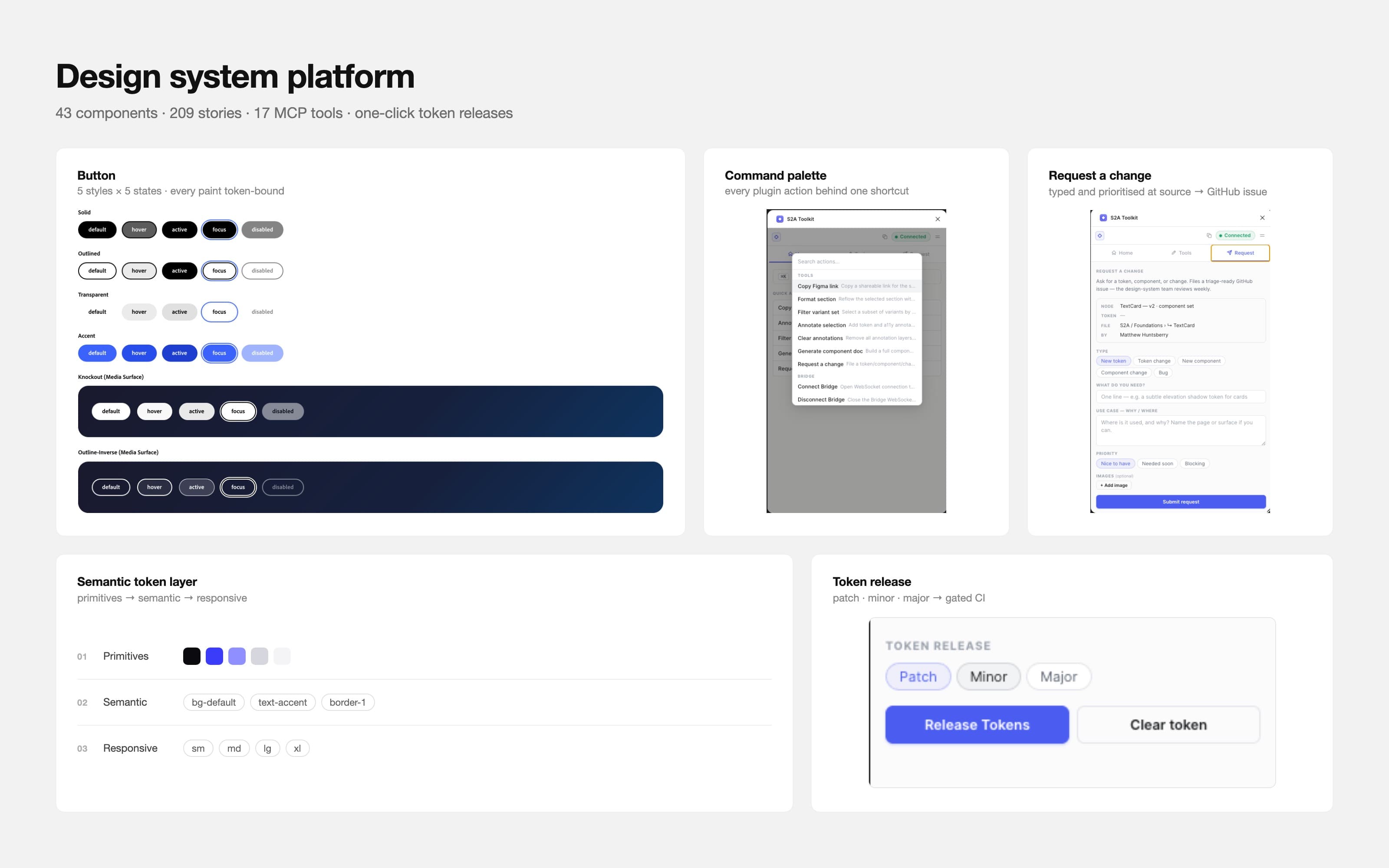
GLOBAL CREATIVE SOFTWARE
A homepage with global reach ships on a platform I built end-to-end.
43 components · 209 stories · 17 MCP tools · live in production
Read case study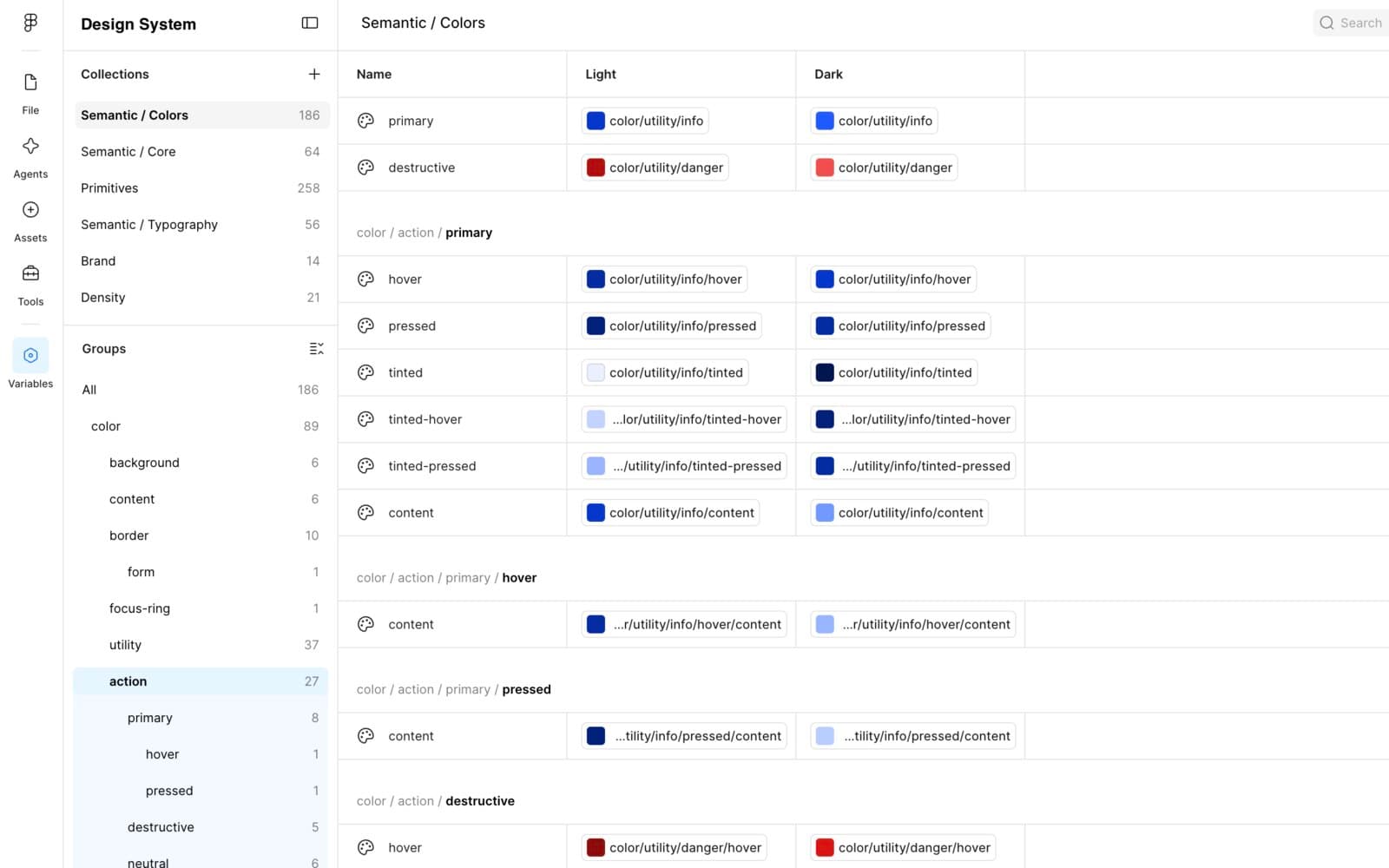
EARLY-STAGE PRODUCT TEAM
Theme, brand, and density as three composable axes of one system.
599 variables · 6 collections · 3 mode dimensions
Read case study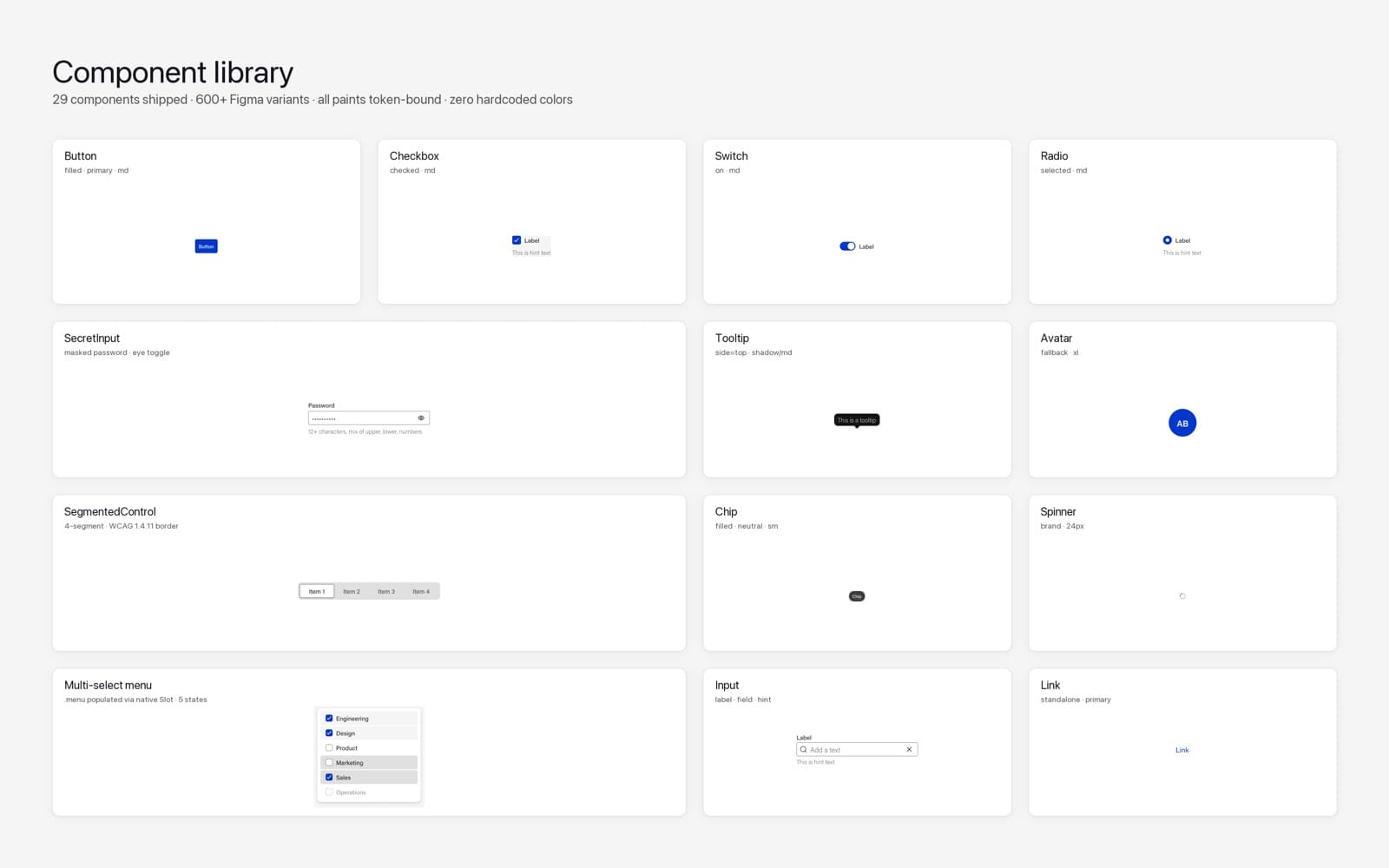
CYBERSECURITY SAAS
Specs as the contract. Figma and code as adapters. Zero drift.
29 components · 0 hardcoded paints · 17 MCP tools
Read case study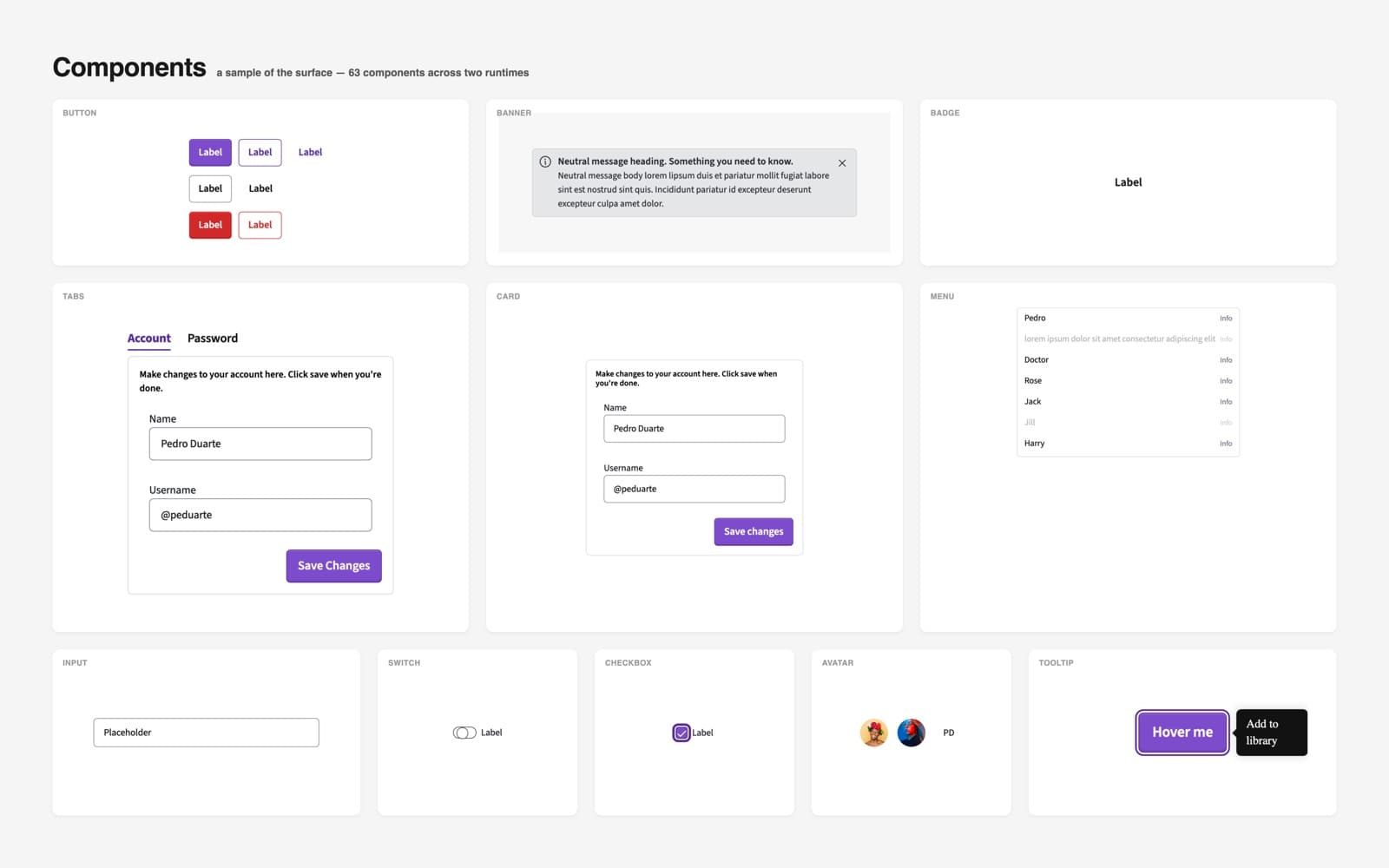
GOVERNMENT TECHNOLOGY
One token source feeding two component runtimes that never disagree.
698 tokens · 63 components (23 web + 40 React) · 14 MCP tools
Read case study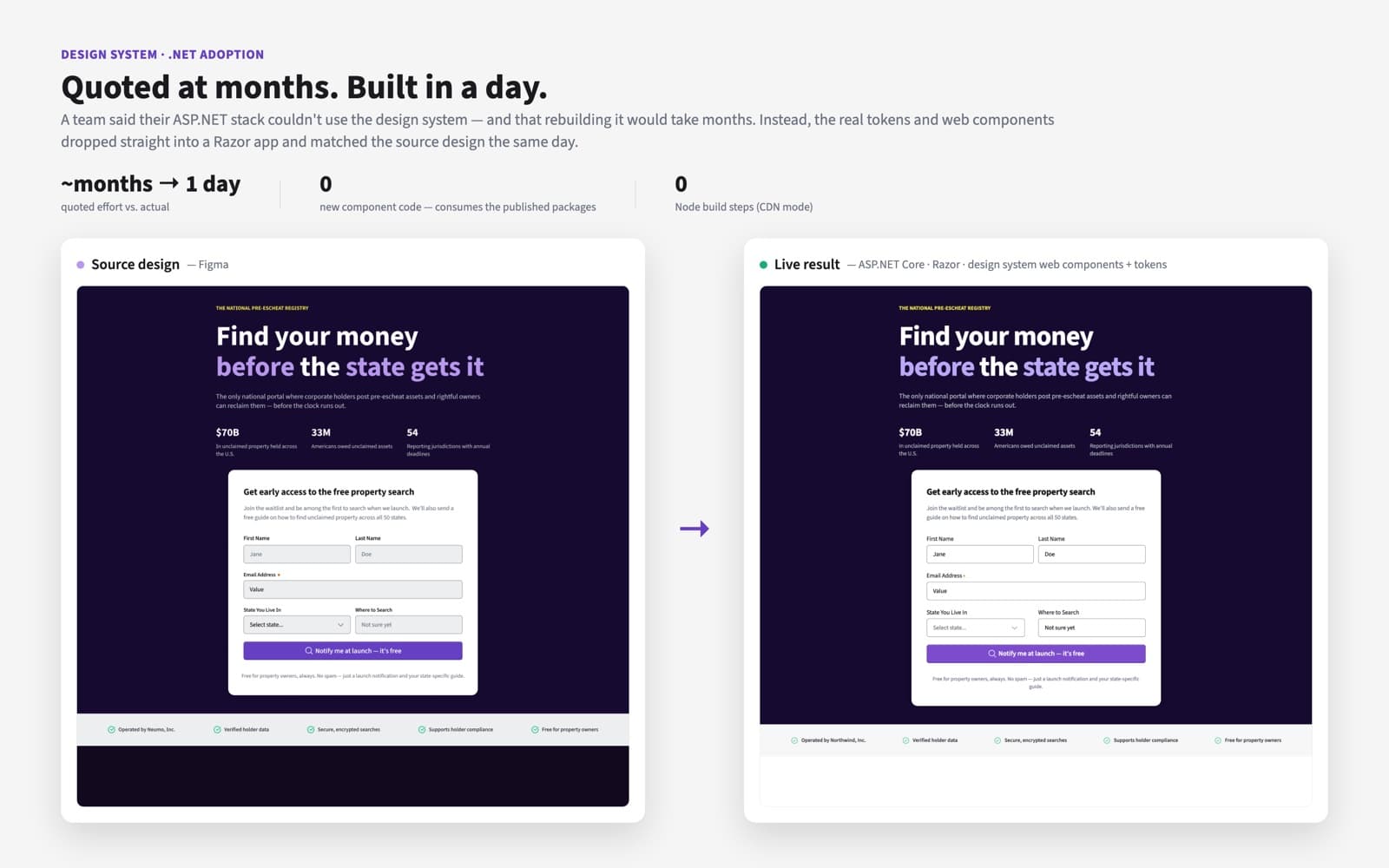
GOVERNMENT TECHNOLOGY · ADOPTION CASE
The same components, dropped into ASP.NET Core as plain HTML.
0 new component code · 0 build steps · 3 apps, one component layer
Read case study
The playbook
Five layers, and the order I build them in.
Tooling comes first — the Figma plugin and MCP server before the components — so everything built afterward inherits the same source of truth. Each layer ships as a discrete deliverable.
- 01
Token Pipeline
Figma Variables → JSON → semantic CSS, published to npm. A rebrand becomes a token PR instead of a component sweep.
- 02
AI Context (MCP)
An MCP server over the live system — 17 tools spanning tokens, components, specs, and audits. Assistants query the real thing instead of hallucinating a plausible-looking button.
- 03
Figma Plugin
The same data pushed back into Figma. Variable scaffolding, dark-mode audits, spec annotation — whatever the team keeps doing by hand becomes a command.
- 04
Component Library
A framework-agnostic runtime that other frameworks consume, rather than a React library everything else has to work around.
- 05
Governance
20 ADRs, accessibility gates in CI, alignment scoring. Governance becomes a number a PM can read instead of a design review someone has to attend.
About
The parts that usually get skipped.
I’m Matt. I work hands-on, and I care most about the details that decide whether a system survives contact with a team: variant axes that map onto the component API, tokens that survive a rebrand, density that lives in variables instead of duplicated components, documentation that can’t drift because nothing maintains it by hand.
The case studies cover how each of those held up once a team was actually using them — including where they didn’t.
Contact
Open to design systems roles.
There’s more behind each case study than belongs on a public page — the constraints, the approaches that didn’t work, the calls I’d make differently now. Ask and I’ll walk you through it.